Good care for vegetarians and vegans
If you run a care home or work in hospitality, you already know how closely the Care Quality Commission (CQC) looks at the care you provide. What you may not know is that failing to respect a resident’s vegetarian or vegan beliefs isn’t just poor practice – it can put you in breach of regulations and even lead to enforcement action.
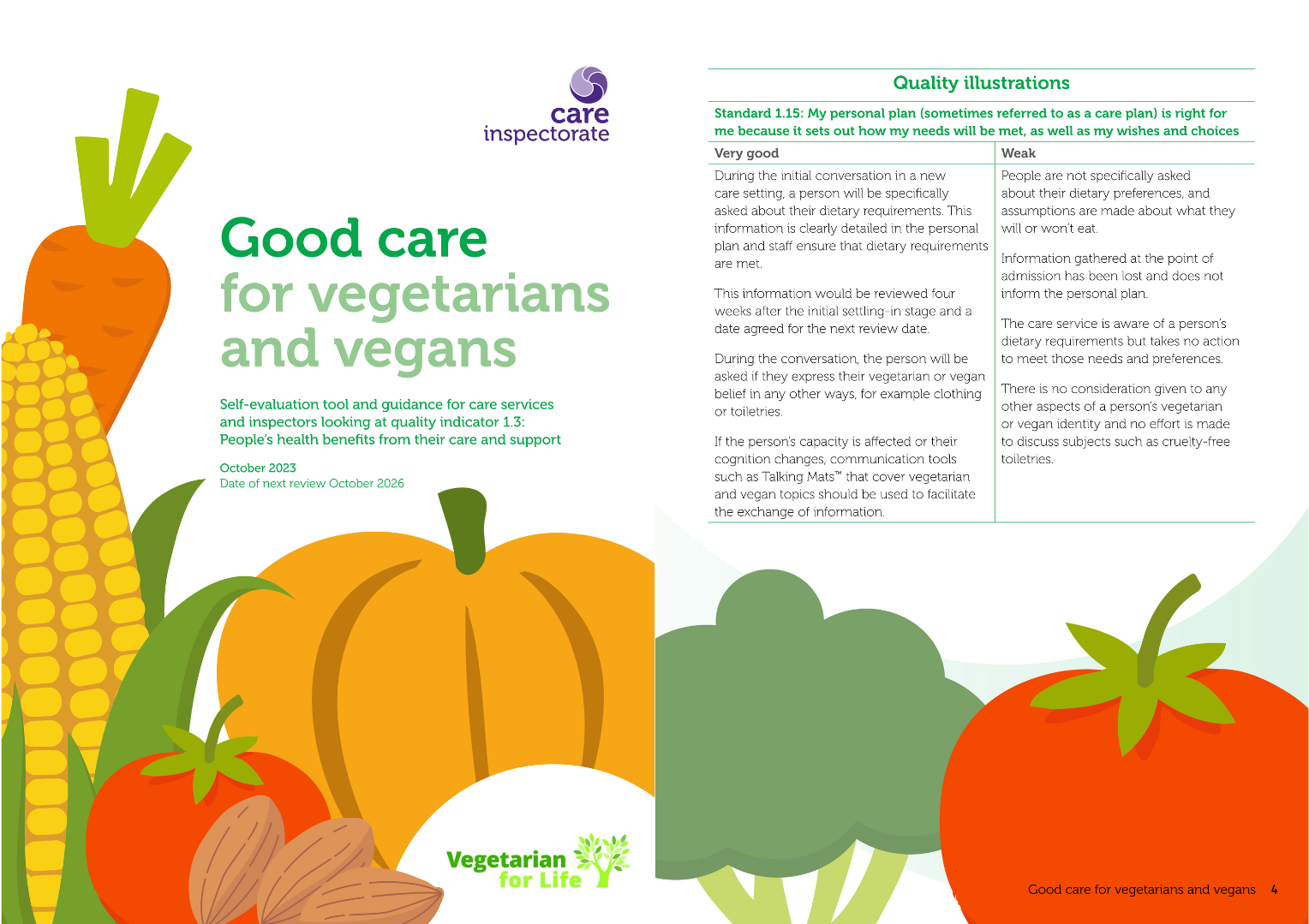
This page explains what the CQC expects of you, why it matters, and where to find practical guidance – including the joint Good care for vegetarians and vegans resource produced by Vegetarian for Life and the Scottish Care Inspectorate.
Why this matters
For many older people, vegetarianism or veganism isn’t just a preference – it’s a deeply held belief, often lived out over a lifetime. Serving food that goes against these beliefs is not only distressing for the individual, but it can also breach your legal duty of care.
The CQC has made it clear: care must be person-centred, respectful and responsive, which includes meeting people’s dietary needs linked to religion or philosophy.
What the CQC looks for
CQC inspections are guided by 5 key questions: is your service safe, effective, caring, responsive, and well-led? When it comes to food, here’s what inspectors expect to see:
The regulations you must meet
Three regulations are especially relevant:
- Regulation 14 – Nutrition and hydration: You must provide food and drink that meet not only nutritional but also moral/ethical needs. CQC can prosecute if failures here lead to avoidable harm.
- Regulation 9 – Person-centred care: Each resident’s needs and preferences, including diet, must be built into their care plan.
- Regulation 10 – Dignity and respect: People must always be treated with respect – including respect for their beliefs and dietary choices.
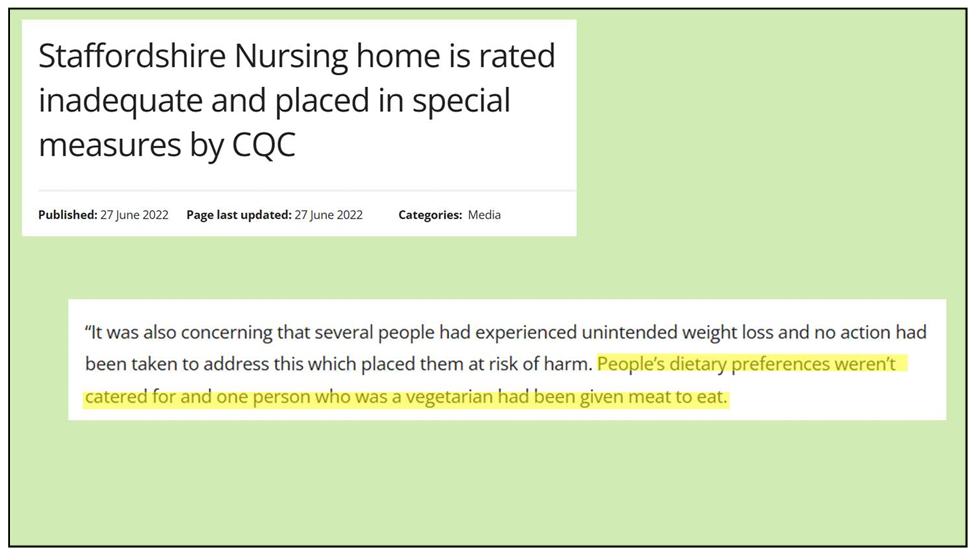
Case in point: a care home was placed in special measures when inspectors found a vegetarian had been served meat.